Every behaviour is a form of communication.
Whether a child is laughing, shouting, refusing, withdrawing, hitting, crying or seeking attention, their behaviour is often telling us something about how they are feeling, what they need, or how they are experiencing the world around them.
Children are not born knowing how to manage big emotions. The parts of the brain responsible for self-control, emotional regulation and decision-making continue developing throughout childhood and adolescence. As a result, behaviour is often driven by feelings rather than logic.
While behaviour can sometimes be challenging, understanding the reasons behind it can help us respond with greater empathy, confidence and effectiveness.
On this page, you’ll find evidence-based information about:
• Emotional regulation and self-control
• Tantrums, meltdowns and emotional outbursts
• Attention-seeking behaviour
• Boundaries and discipline
• Behaviour and brain development
• The impact of stress, anxiety and sensory needs
• Neurodiversity and behaviour
• Positive behaviour support strategies
My aim is to help families look beyond behaviour itself and understand the emotions, needs and experiences that may be driving it.
Because when behaviour makes sense, supporting children becomes a little easier. ❤️
Latest Articles
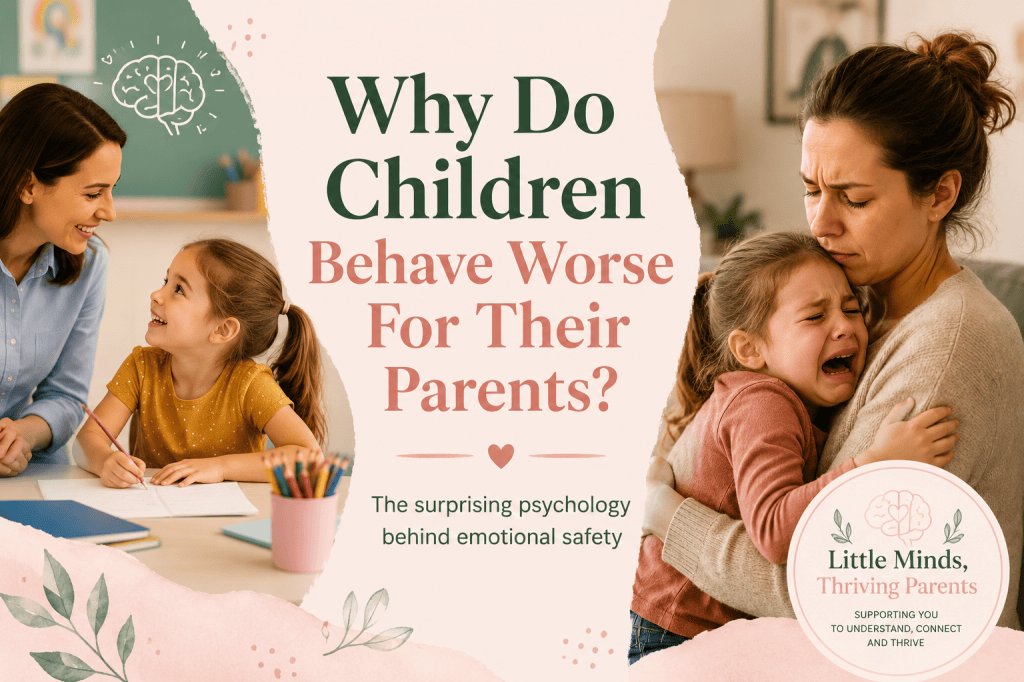
Why Do Children Behave Worse for Their Parents Than Anyone Else?